
Finden Sie Ihre Lösung!
Je nach Anwendung, Rahmenbedingungen und Zielstellung können klassische Bildverarbeitungsalgorithmen manchmal die bessere Lösung sein als KI-Methoden. Hier finden Sie eine kurze Gegenüberstellung der beiden Ansätze:
|
Kriterium |
Klassische Bildverarbeitung |
Machine Learning Ansatz |
|---|---|---|
|
Datenbedarf |
gering |
hoch |
|
Robustheit |
hoch (nur bei geringer Variabilität) |
hoch (abhängig von der Anwendung) |
|
Erklärbarkeit |
hoch |
mittel |
|
Setup Aufwand |
gering |
höher |
|
Use cases |
feste Geometrien |
Komplexe Muster / Defekte |
Was sind neuronale Netze?
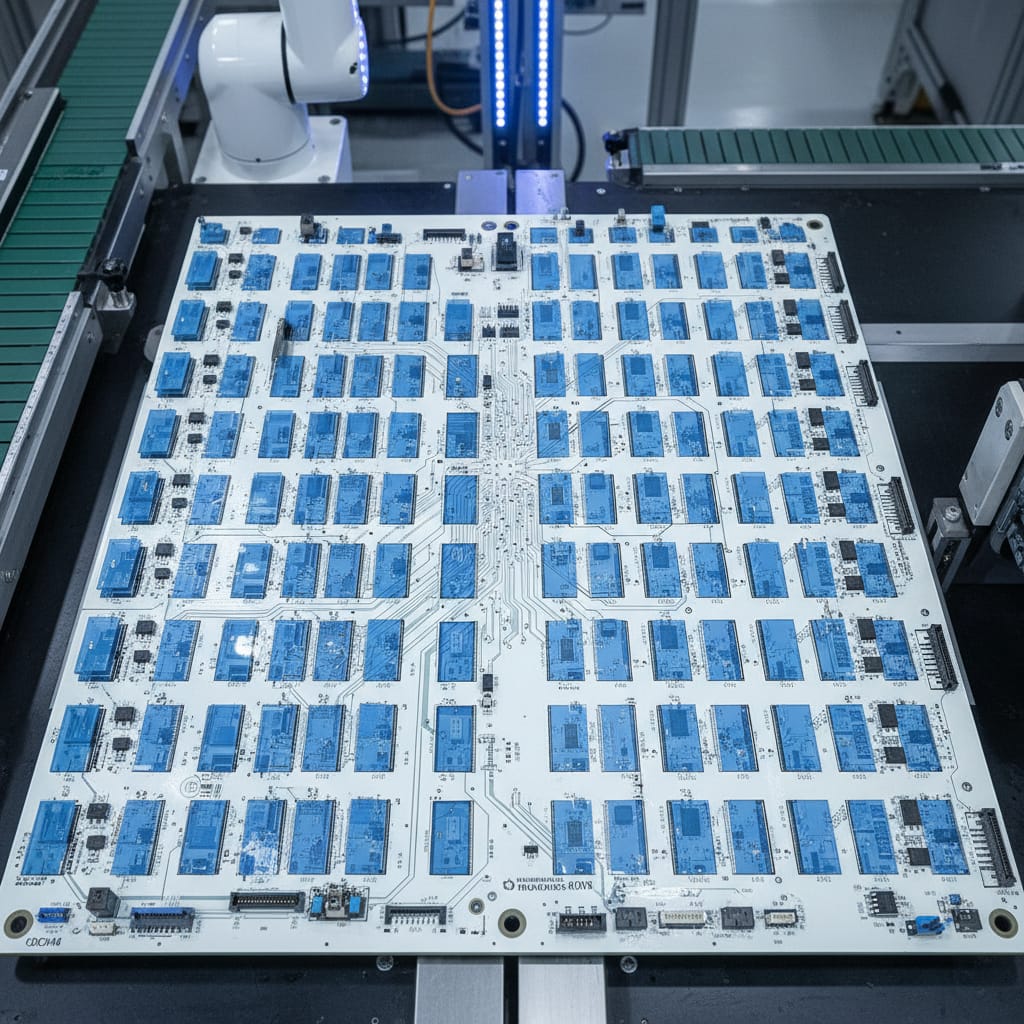
Neural networks form the basis of intelligent computer vision models. They are trained using large amounts of data and can be used to make predictions on additional (new) data. In image processing, image data is used as the input format for the networks, and the expected output is classification, object detection, or image masks. An often underestimated alternative is classic image processing algorithms, for example for edge detection or to identify quality defects based on brightness differences in the image.

Classification

Detection
Segmentation
In vielen Anwendungen kann eine Automatisierung mit neuronalen Netzen zur Qualitätskontrolle und Prozessüberwachung Ausschuss senken, Sicherheitsrisiken in der Produktion minimieren und Stillstandszeiten senken. Das spart Zeit, Kosten und Aufwand. Kontaktieren Sie mich gern – gemeinsam finden wir die beste Lösung für Ihre Anwendung!

Clear Communication

Individual Software

Collaborative reviews
Frequently Asked Questions
Das Erstgespräch ist immer kostenlos! Eine Machbarkeitsstudie geht je nach Anforderung über 1-2 Wochen und kostet etwa 5.000€. Danach wissen Sie ob sich ein Computer Vision System für Ihre Anwendung lohnt und mit welchen Rahmenbedingungen entwickelt werden sollte. Die Kosten für ein Komplettsystem hängen stark vom Entwicklungsaufwand ab und beginnen bei 15.000€.
Es müssen ausreichend nutzbare Daten als Grundlage für ein Machine Learning oder Computer Vision System verfügbar sein. Alternativ können Methoden wie Daten Augmentierung, Simulationsdaten oder Transfer Learning genutzt werden.
Die meisten neuronalen Netze werden auf GPU (Grafikkarten) trainiert, laufen in der Produktion allerdings im Inference Mode auf CPUs oder spezialisierten Beschleunigern. Es ist also keine Anschaffung von speziellen Grafikkarten für den Betrieb von intelligenten Computer Vision Systemen notwendig. Die Infrastruktur für das Training ist im Preis bereits enthalten und durch optimierte Modelle wird die Lösung an die jeweilige Hardware angepasst.
Fertig entwicklete System können über Desktop-Anwendungen oder Web-Interfaces eingebunden werden. Außerdem ist eine Kommunikation über OPC UA oder TCP/IP Protokolle möglich, um einen smart factory Ansatz zu implementieren. Dashboards und reports fassen die Ergebnisse des Systems zusammen und stellen sie einheitlich für den Benutzer dar.